Showing posts with label Non-Fiction History. Show all posts

10/10/2009

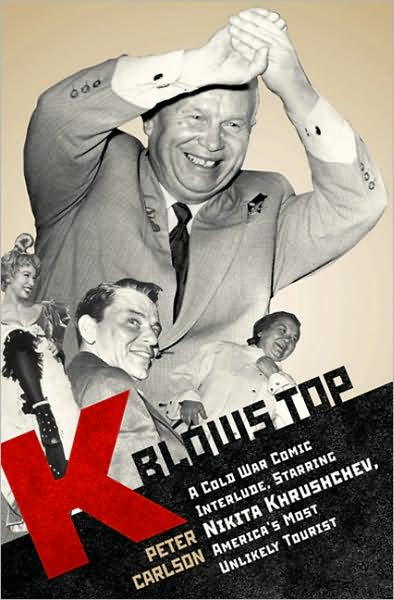
K Blows Top by Peter Carlson


In 1959, the leader of the Soviet regime, Nikita Khruschev, visited the United States for a lengthy tour of both major cities and country fairs. He was met with varying levels of interest, sometimes parades and sometimes protests (and sometimes both).

The author begins his story with Vice-President Nixon's visit to Moscow and the "Kitchen Debates", but that is only the preface to the real story. Originally Khruschev was to reciprocate the invitation to come to America with an agreement to meet for talks on the arms race. But wires got crossed, and the codicil to the invitation went unvoiced.

This put the tour by Khruschev on a somewhat tense level with the Eisenhower administration which felt it had an obligation for diplomacy by allowing the tour to be one-sided from their point of view, but it was pulled together nonetheless. What follow in the latter ¾ or so of the book is an entertaining and often hilarious tale of the Soviet premier's encounters with diplomats and ordinary citizens as he goes from New York to Los angeles to a county fair in the Mid-West, with people fawning over him in some of the most unlikely of places, given the atmosphere of the time. (This, you will have to be aware, occurred not long after the McCarthy "Red Scare", and just following on it's heels would have been the Bay of Pigs and the Cuban Missile Crisis of the next President's term.)

All of this proves to be one of the more readable biographies I have read in recent years (albeit not a true "biography" in the sense of the word that I would normally mean, since it spans less than a year in total time). I highly reccommend it to anyone who normally avoids biographies, though, because it hardly feels like one, more like an anecdotal remembrance instead.

I rate it 7½ stars

5/29/2009

The Grand Inquisitor's Manual: A History of Terror in the Name of God by Jonathan Kirsch


Having previously read Kirsch's The Harlot by the Side of the Road:
Forbidden Tales of the Bible
and Moses, A Life, I was fully expecting to immerse myself in a bok that would grab my attention and keep me interested. I had read both of those and thoroughly enjoyed them. I found Kirsch's style engaging and entertaining.

How can a writer go from good to worse? I don't know, but I was, by page 10, convinced that this was not the same author who had witten those two previous tomes. Not only did I find the whole thing a drag to keep focused with attention, the author's occasional slip into his own political view grated on me. Whether or not I agree with his stance is immaterial. To point out comparisons to past history to present may be acceptable. But to allow it to be the basis of a soapbox, however brief, is not.

Not only that, but it appears that all the author did was update (and codensation) an older tome on the subject. A great portion of his references are to one book (or books, as the case may be) in particular; Henry Charles Lea's 4 volume History of the Inquisition of Spain. There appeared to be more quotes from this source than all of the other sources combined.

Forgive him for his repeated comparisons of the terror tactics of the inquisitors to the Nazis, since I assume he is of Jewish origin, and would thus have a right to his stance. But driving home his point to include what is obviously a political agenda by comparing the tactics to those at Guatanamo is just a bit much.

Only 5 stars for this one.

5/02/2009

The Wicked Wit of the West! by Irving Brecher as told to Hank Rosenfeld


If you are like me, the first thing that comes to your mind when you saw the author of this book was "Who the $%&* is Irving Brecher?" Well, it turns out that he is one of the wittiest writers in Hollywood that you never knew existed. He wrote several screenplays, two for the Marx Brothers (At the Circus and Go West), and was influential in the early career of Milton Berle.

He was also the creator the radio show The Life of Riley, one of the classics of yesteryear. In essence, he was the behind-the-scenes man in Hollywood in the 30's and 40's. He ran into some trouble with the McCarthy Red Scare and the right-wingers who fingered him and other leftists in the 50's, but he did manage to get back in the good graces after that unfortunate period in history.

And he was funny. (I say was, because he was not fortunate enough to survive to see the printing of his autobiography, having died late last year.) The stories and anecdotes here are, for the most part, laugh out loud hilarious. Only when Brecher gets on his soap box about politics does it bog down, but that is rare in this book.

I rate it 7 stars.

2/15/2009

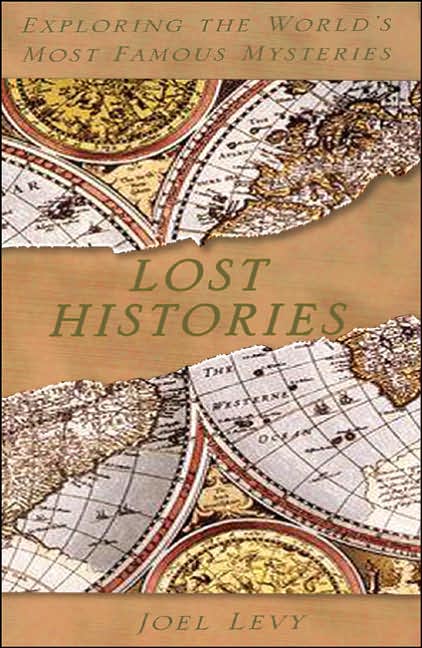
Lost Histories by Joel Levy


What happened to the missing colony of Roanoke? Or Amelia Earhart? What and where is the Holy Grail? These and other intriguing mysteries of times past are discussed within these pages. Did Atlantis really exist, and if so, where was it? Where is this place called El Dorado, the mythical city of gold?

The author covers most of the theories in brief, discussing the possibilities of each being the correct solution, as well as presenting the evidence for each theory being mistaken. I can't say for sure whether he covers every known theory surrounding each mystery, but for the ones in which I was previously well-versed, I can vouch that he does cover all of the theories I knew.

Levy never actually commits to any one theory, although he does debunk a fewof the more outlandish theories surrounding some of the mysteries. For instance, he is convined that the wacky theory that the colony of Roanoke was a victim of alien astronaut kidnapping is not likely the solution.

The writing is interesting, if a bit dry, but for an introduction into the mysteries of disappearances and lost cities, it is a very good place to start. Guaranteed you will be able to hold forth on the subjects should hey come up in conversation,and if they don't well, you can bring them up yourself.

I rate this one 7 stars.

1/31/2009

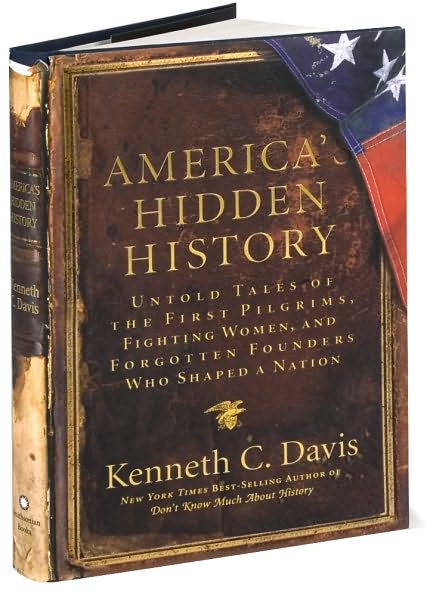
America's Hidden History: Untold Tales of the First Pilgrims, Fighting Women, and Forgotten Founders Who Shaped a Nation by Kenneth C. Davis


Kenneth Davis has a style that is engaging and has kept me coming back to his books every time. I first encountered him with his Don't Know Much About... series. Any one of those would be a good starting point to read and improve your knowledge on the subjects which he writes.

This book was entirely different from the trivia style tidbits that made up the format of the Don't Know Much About... books. Instead of the brief vignettes that comprised the volume of those books, here, Davis discusses only 6 stories. And those stories only cover a period of history involving the first 200 years or so of its history.

The author, whose style I so admired from the Don't Know Much About... series, however, seems to have morphed into a less-focused writer in the interim. I found myself trying hard to stay focused, as he doesn't seem to be very focused himself. He jumps around a lot in getting to the main story, and even then, I was left a bit unclear as to what conclusions he was trying to draw.

And the title is a bit misleading to a fan of history. Actually, only one of the stories was unknown to me, so "Hidden" is not necessarily the best choice for a title (although I bet plenty of people buy the book for that title, so maybe it was a good choice after all). All-in-all, I think you would be best served to stick with the Don't Know Much About... books, and leave this one on the shelf.

I rate it 4½ stars.

1/24/2009

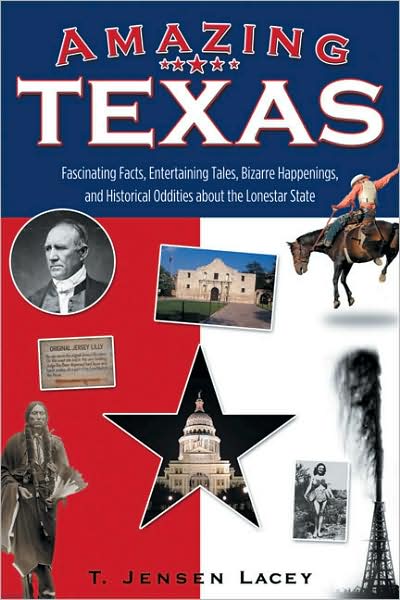
Amazing Texas: Fascinating Facts, Entertaining Tales, Bizarre Happenings, and Historical Oddities about the Lonestar State by T. Jensen Lacey


Trivia books are a dime a dozen, theoretically speaking. You can find just about any subject and there will be a pop culture style book with little facts and anecdotes about it somewhere. Even truer for something like Texas, where the people of the state tend to create an enthusiasm within their oit outside the confines of the state.wn ranks, as well as oft times inspiring enthusiasm for it outside the confines of the state.

Personally my favorite to fill this niche is
Uncle John's Bathroom Reader Plunges into Texas. But I like the format and random tidbits style of all the Uncle John's books.

It would be unfair to judge this book against another. a book should be judged on it's own merits. To her credit, the author does include a lot of interesting material about the state, it's history and it's general makeup. And there are even some things here that I did not previously know. (And, believe me, I know a lot about Texas, having spent almost my entire life here.)

The problem I had with the book was not so much as the content itself, but as with a lack of interesting style. Nothing seems to reach out and grab you. Bland stating of facts is what I felt from the start. Not that you can't learn anything from the book, especially if you are a novice to things Texas. I just feel your time would be better spent seeking a different book.

I only give this one 5 stars.

1/03/2009

Ponzi's Scheme: The True Story of a Finincial Legend by Mitchell Zuckoff


A car trip of over 5 hours can be pretty boring. That's why whenever I make the trek to visit family, I listen to the radio quite a bit. But eventually that gets pretty boring too, even without having to channel jump to keep getting a station with a clear signal.

This year, I decided to try a book on CD. After all it would make the time go by just as easily. And, as an added bonus, I could get a book "read" while driving.

My choice was Ponzi's Scheme. This being my first book on CD, and the first time in many years for audio books of any kind (back in the day, there were no CDs yet and my books were audio on cassette tapes), I didn't quite know what to expect. I found out right off, that due to CD capacity, the book was unabridged, meaning I got to hear the whole book, not just an edited down version, as was the case with the cassettes of old.

The book was read by Grover Gardner. A few words on the quality of the reading is in order. I thought the monotone delivery was a little dry. Hardly any emotion comes through on the reading. That much I remember from the old days. I imagine it is a standard in the industry, because I have never heard an audio book with much emotion in the reading.

That said, the story was quite interesting. With the exception of one chapter that was devoted to the life and politics of former Boston mayor, James Michael Curley, I thought the story went rather well. The fact that Curley does not seem to be a major player in the rest of the story was the cause for me to find this section out of place. At least with the case of Edwin and Richard Grozier, publishers of the Boston Post, there was a constant link to the story, so delving into their lives did not cause any comment.

What the story boils down to, in case you are not familiar with it, an Italian immigrant, Carlo (Charles) Ponzi, ran an illegal racket in which he claimed to be dealing in postal reply coupons, buying them in one country that had a cheap rate, and selling them for a higher value to another country. Investors were guaranteed a 50% interest on their investments, but what it really came down to was a "robbing Peter to pay Paul" scheme in which he used later investors money to pay off previous investors.

Knowing all this does not in the least take away from the enjoyment of the book, whether read by you or by the audio reader. I know, because I was fairly well knowledgeable on the subject beforehand, and still got enjoyment from it.

I rate the book 7 stars, but I rate Gardner's audio version only 5. I think you would find it more enjoyable just taking the time to read it yourself.

5/14/2008

No-Man's Land by Scott Huler


I have never read Homer's Odyssey, although I know most of the story by way of either movies, or in discussions in grade school/high school, or vicariously through other writings in which author's have referred to it. Some of the story, thus, is news to me because I don't know the whole story.

Huler seems to have had the same story that I have, although, as he states early on, he always thought it was true when he claimed he had read the story. The initiation of the tale here is that, after finding out that he had indeed never read it, upon reading the story, he got the wild hair to actually try to retrace the journey that Ulysses did in The Odyssey.

At the outset he is hampered by the fact that he wants to spend time planning it out, but recieves word from his wife that she is pregnant. Of couse, if he scrapped plans entirely, we wouldn't have a book. Instead, he decides to try the epic journey on the fly. Using a variety of resources, and sometimes just sheer intuition, Huler makes the journey to the Mediterranean, and tries retracing the trip.

Notwithstanding that approxiamately ¾ of the book takes place in obviously mythological places, Huler nonetheless tries to approxiamate the places with real places. He often does this on the fly, and succeeds for the most part. You get a sense of the frustration that he has in trying to complete the journey, though, and it parralels quite well with how one might imagine Odysseus' frustration with trying to get home to Ithaca.

Overall, this journey/travelogue reads quite well. I rate it 7½ stars. Perhaps I ought to make reading The Odyssey a future project now.

4/29/2008

Freedom for the Thought That We Hate by Anthony Lewis


I am a vociferous advocate for free speech, and therefore was almost obligated to read this book. I fully expected to be enlightened by the actions of our forefathers, most specifically James madison , the noted author of the amendment.
I was not disappointed, there, and did find some interesting tidbits concerning the differences between how freedom of speech was looked upon in the early years of our country, and how they evolved over time.
Unfortunately, I found the author very dry, and had a hard time keeping all my attention upon the subject. Despite my interest in the subject, I found myself distracted, and going to other books during the time. Sometimes, even a Pulitzer caliber author can be a little off.

I gave this book 5½ stars.

1/19/2008

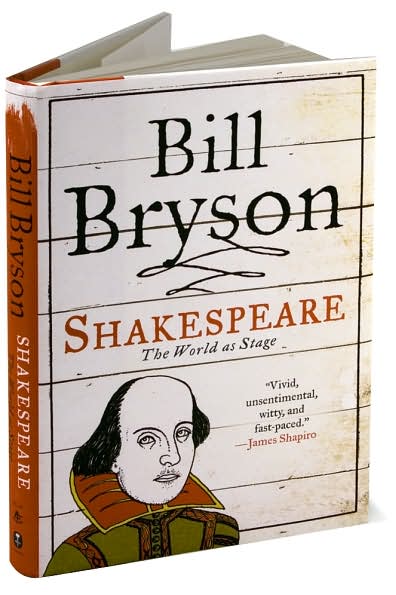
Shakespeare: The World as Stage by Bill Bryson


Does the world need yet another book about the life of Shakespeare? Probably not. As the author so deftly mentions at one point in this book, there are about 7,000 or so books in the Library of Congress alone on the famous bard. Some of those surely would serve the purpose. .

However, the follow-up question is Does the world need yet another book about the life of Shakespeare if it's by Bill Bryson? Here I would have to give a resounding "Yes". .

I make no excuses that Bill Bryson is one of my favorite authors. His style of writing captivated me from the firstbook I ever read by him, "Made in America". Anyone that can make the history and origins of words as readable as he did there is well worth reading. .

Here, as Bryson puts it, is the history of Shakespeare, his life and his inspirations, but only the parts that can be well documented. Much of what is written about the bard is pure speculation based on what fragmentary knowledge can be found. Bryson distills the fluff from what is fact and then writes in his usually engaging style to make what essentially could be dry and boring, into the interesting. .

I must admit I did find one part a little tedious, that on Shakespeare's sonnets, but this can probably be tied up in the fact that I don't care for Shakespeare's sonnets in the first place. I can't put the full blame on the author in this regard. Overall, though it was a good read..

.

Rate this one 8 stars.

8/05/2007

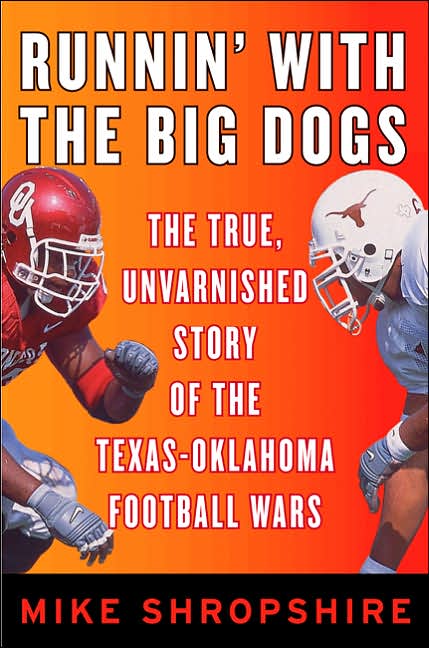
Runnin' With the Big Dogs by Mike Shropshire.


Another football book. The true unvarnished story as it were. The University of Texas and the University of Oklahoma since 1900, have met every year, to play a game in one of the hottest rivalries in college football. Over the course of those years, there have been antics both on and off the field. Sometimes characters crop up on either side, including the aforementioned Joe Don Looney from my last review.
"The Red River Shootout" as it is most commonly known today, has had its share of the limelight. Most years, one or even both teams have been bowl bound. In the early years (up until 1994, when the SWC was disbanded and the teams went to other divisions), this meant the Cotton Bowl was in Texas' sights, and any one of the other major bowls was on the horizon for OU.
Because it has been held in Dallas for most of those years, a lot of hijinx have occured in the neighborhood of the Cotton Bowl stadium and the hotels where the two teams stay during the weekend of the game. Some of this is from the frenzied fans, and some is the result of the team members themselves. Craziness when mixed with liquor (which was not quite as controlled in earlier years as it is now...) can lead to some prety outrageous stunts. Don't miss the Joe Don Looney chapter. A guy after my own heart.
I rate this one a full-blown 10 stars, even if the writer is a little biased on the OU side.

5/10/2006

Rat Scabies and the Holy Grail by Christopher Dawes


Rat Scabies and the Holy Grail by Christopher Dawes

This is the ultimate in road trip books. The author, a music writer for several magazines, has a neighbor. That neighbor is the extremely eccentric former drummer for the punk rock band, The Damned, known to the worlds at Rat Scabies. Rat is a stoner and an obssesive even in his advancing years. One obsession that Scabies has is the Holy Grail, or more specifically the aspect of it that concerns Rennes-le-Chateau in France.

For those of you, who like me, have not ventured into the world of The DaVinci Code, this may or may not be a total mystery. Having caught History Channel programs on the subjects covered in Dan Brown's book, I have a little bit of a jump on it.

Although a thorough understanding of the details and the mysteries involved might come in handy, this is more or less really a road book. Think Hope and Crosby on drugs. Some of the passages in Dawes story are frankly more hilarious than anything Hope & Crosby did on the big screen.

I have to say that this book will likely leave you wanting more. If thats the case, I will frequently be tackling other books on the subject and will update you on the best and worst of the selection. As far as Dan Brown's book, I'm going to commit the ultimate sin of a fanatic for books....I'm going to wait for the movie.

I'll rate this one 7 stars. Enjoy.

Winthrop

4/19/2006

The Flag, The Poet and The Song by Irvin Molotsky


The Flag, The Poet and The Song by Irvin Molotsky:

I found this book to be extremely irritating. As far as history books go, it is a far cry from the standard. The author, contrary to most historical texts I have read, frequently interjects personal opinions on the events he desribes. For instance, early in the book, he mentions, not once, not twice, but three times in the same paragraph the fact that Francis Scott Key, the writer of the Star-Spangled Banner, owned slaves. The point being that he, the author, was critical of someone whose words espoused freedom should have been a slaveholder. Molotsky does this personal interjection more than once throughout the book. In its strictest sense, a historian should be more objective when writing.

As a historical piece, it is quite fascinating, especially since he covers areas that are not that well-known to most American citizens, including the fact that the burning of Washington during the war of 1812 was instigated by a similar act taking by the U.S. Army in Canada just a few weeks earlier.

Most of the first few chapters tell the story of the war as it lead up to the British army's failed attempt to take Baltimore and Fort McHenry, from where, as a prisoner on a British ship, Key wrote the words to the American national anthem. Later chapters detail the rise in popularity and its official recognition as the national anthem.

All in all, it is well-written and were it not for the frequent interjections of opinion, I might have given it a higher rating.

Rate this one 5½ stars.

2/01/2006

A History of the World in Six Glasses by Tom Standage


Tom Standage is one of those authors whose new works I will seek out when they are published. His best work to date is "The Turk" about the "automated" chess player from the 18th century. "A History of the World in Six Glasses" is up there, but not quite as good.

Essentially the book is divided into six sections of two chapters each, detailing how civilization evolved and changed due in some part to a particular popular new drink. These drinks are beer, wine, spirits, coffee, tea, and soft drinks. Each section devotes some time to the deveopment and use of the drink in question.

By far, my favorite section is the one on beer. The basic idea of settling in one place for agricultyral reasons (to raise the grain to make beer) is not refuted, entirely, but Standage makes some facts known that this was not solely the case.

He continues with wine, which at first was the elixir of only the nobility, while the commoners still drank beer. But that changed as the production of wine became easier. Soceity evolves as well as does the industrial technology as the book goes on, as a result of each new drink's introduction into the world.

The only section I really found boring was the one on tea, due in some part to the fact that I don't like, nor drink it, I'm sure. Otherwise it is a fascinating book, even for those who don't like history, I would wager.

Rate this on 7 stars.

Winthrop

1/05/2006

Washington Goes To War by David Brinkley


Sometimes with books, even more with movies, I run across something that is so good, I wonder how I missed out on it before. David Brinkley's "Washington Goes To War" is one of these. Actually published in the late 80's, it covers the effects of pre-war, war and post-war as it affected what was essentially a sleepy little town prior to the events of WWII.

Brinkley covers the society, including how many of Washington's elite reacted to the New Deal workers invading their patrician circles. He also covers the political scene, much of which parralells to today's pro- and anti-war factions battling it out in Congress and on the street.

Some of the best parts are how the southern city in a segregated south, deals with the influx of blacks during the height of the depression. You may be appalled by what the living conditions were as described by the author, but this is definitely one of the areas where his writing shines.

I doubt that the city is even remotely the same as described here, since 65 years have insured that it at least move somewhat into the modern world, but as a cultural piece detailing a bygone era, Brinkley does it with great expertise.

I give this one 7½ stars. My next reading assignment is two books, so it may be a while before the next review. For the religious side I am going to read "Why Men Hate Going to Church" by David Murrow. And for the secular side I plan to read "Slam-Dunks and No-Brainers" by Leslie Savan.

Winthrop